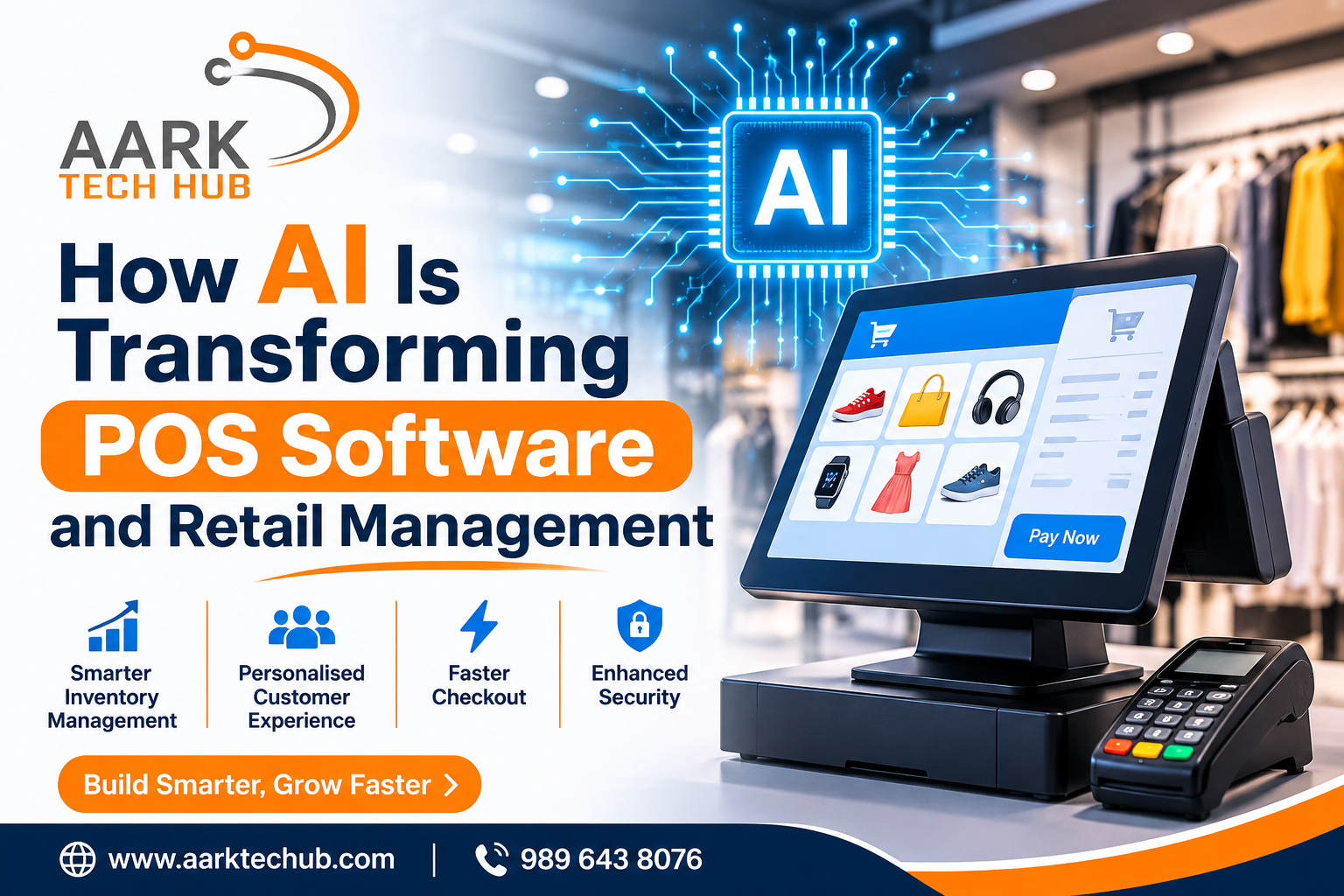
Retail businesses are changing rapidly as technology continues to improve the way they manage daily operations. From handling customer orders to tracking inventory and managing payments, businesses need smarter solutions to stay competitive. Traditional Point of Sale (POS) systems mainly focus on billing and transaction management. However, modern AI-powered POS software is taking retail management to the next level.
Artificial Intelligence (AI) is helping retailers automate repetitive tasks, understand customer behaviour, predict product demand, and make better business decisions. By combining AI with POS software, businesses can improve efficiency, reduce operational costs, and deliver better customer experiences.
Let's understand how AI is transformingware POS software and modern retail management.
1. Smarter Inventory Management
Managing inventory is one of the biggest challenges for retail businesses. Overstocking increases storage costs, while running out of popular products can lead to lost sales.
AI-powered POS software helps businesses manage inventory more efficiently by analysing previous sales records, seasonal trends, and customer buying patterns. It can predict which products are likely to sell faster and when businesses need to restock.
For example, if a retail store experiences higher demand for certain products during festivals, AI can analyse past sales data and help the store prepare inventory in advance.
This makes inventory management more accurate and reduces unnecessary stock-related problems.
2. Better Customer Experience Through Personalisation
Customers expect personalised shopping experiences. AI helps businesses understand customer preferences by analysing purchase history, frequently purchased products, and shopping behaviour.
Modern POS systems can use this information to suggest relevant products, offer personalised discounts, and create targeted promotional campaigns.
For example, if a customer regularly purchases skincare products, the system can help retailers recommend related products or offer discounts on similar items.
Personalised recommendations improve customer satisfaction and encourage repeat purchases.
3. Automated Billing and Faster Checkout
Long queues and slow billing processes can negatively affect the shopping experience. AI-powered POS systems help businesses make checkout processes faster and more efficient.
With intelligent automation, POS software can simplify billing, identify products, support digital payments, and reduce manual data entry.
Some advanced systems also use computer vision and smart checkout technologies to recognise products and support automated billing processes.
Faster checkout saves time for customers and allows employees to focus on other important business activities.
4. Real-Time Sales Analysis and Business Insights
Understanding sales performance is important for making the right business decisions. Traditional POS systems generate sales reports, but AI-powered systems can analyse large amounts of business data and identify useful patterns.
Retailers can understand:
Which products generate the highest revenue.
Which products are selling slowly.
What time customers purchase the most.
Which promotions generate better results.
How sales performance changes over time.
AI can also help identify unusual sales patterns and provide insights that support better planning.
With access to real-time information, business owners can make smarter decisions instead of relying only on assumptions.
5. Improved Demand Forecasting
Predicting future product demand is important for every retail business. Ordering too much stock or too little stock can affect profitability.
AI-powered POS software analyses historical sales, seasonal demand, market trends, and other relevant business data to estimate future product requirements.
For example, a supermarket can use AI-based demand forecasting to understand which products may experience higher demand during weekends or holiday seasons.
This helps businesses plan purchasing activities, manage inventory, and reduce product wastage.
6. Better Security and Fraud Detection
Security is another important area where AI is making a difference. Retail businesses handle multiple transactions every day, making it important to identify suspicious activities.
AI-powered POS solutions can monitor transaction patterns and identify unusual behaviour that may indicate fraudulent activity.
For example, repeated suspicious refunds, unusual transaction amounts, or unexpected payment patterns can be flagged for further investigation.
AI can also support better monitoring of system activities and help businesses improve payment security.
However, AI-based fraud detection should work alongside proper security practices, employee permissions, and secure payment processing.
7. Seamless Integration with Other Business Systems
Modern retail businesses often use different software solutions for accounting, inventory, customer management, and online sales.
AI-powered POS software can integrate with these systems to create a more connected business environment.
For example, when a customer purchases a product, the POS system can automatically update inventory records, generate transaction details, and share relevant information with accounting software.
This reduces manual work, avoids duplicate data entry, and improves coordination between different business departments.
Custom POS software development also allows businesses to build features and integrations according to their specific workflows.
8. The Future of AI-Powered POS Software
AI technology will continue to introduce new possibilities for retail management. Voice-based assistance, intelligent customer support, predictive analytics, automated inventory planning, and advanced payment technologies are expected to become increasingly important.
Businesses will also benefit from combining AI with cloud-based POS systems, allowing them to access important sales and inventory information from different locations.
However, successful AI implementation requires reliable data, proper system integration, strong security, and regular software updates.
Retailers should choose POS solutions that can grow with their business and adapt to changing customer expectations.
Why Businesses Need Custom POS Software Development
Every retail business has different requirements. A supermarket, restaurant, clothing store, and electronics shop may all need different billing processes, inventory features, and reporting tools.
Ready-made POS software may not always provide the flexibility businesses need. Custom POS software development allows companies to build solutions based on their specific operational requirements.
A professional development team can help businesses create POS systems with features such as:
Smart billing and payment management.
AI-powered sales analytics.
Real-time inventory tracking.
Customer management and loyalty programs.
Multi-store management.
Third-party software integrations.
Custom reports and dashboards.
Choosing the right development approach helps businesses create scalable POS solutions that support long-term growth.
Final Thoughts
AI is transforming POS software from a simple billing solution into a smarter business management tool. From inventory forecasting and personalised customer experiences to automated billing and fraud detection, AI is helping retailers improve their daily operations.
As customer expectations continue to grow, businesses need technology that makes their operations faster, smarter, and more efficient.
At AARK Tech Hub, we help businesses turn their technology ideas into practical software solutions. Whether you need custom POS software, business automation, or software integration, our development team can help you build solutions according to your business requirements.